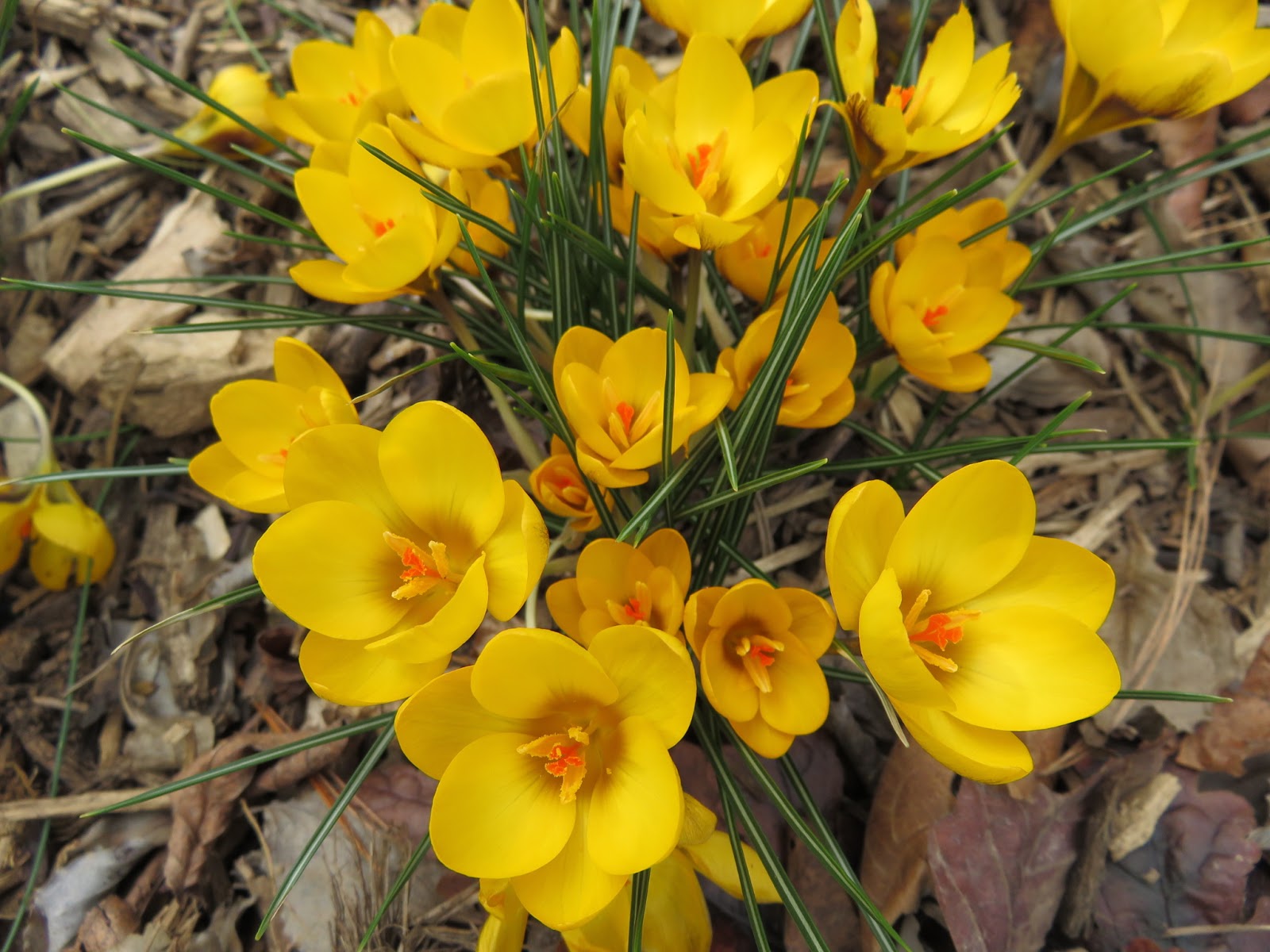
Crocus (Crocus spp.) can be your wake-up call that winter is coming to an end (USDA hardiness zones 3- 8). They bloom in late winter (in the south); fall blooming varieties are also available. Bulbs (they're actually "corms") are available in flower colors from blue, purple, white, yellow, and mixed shades.
Choose from large and small flowered types. Six petal, cup shaped flowers stand tall above the foliage which emerges as bright green blades of grass with a center white stripe. The grassy foliage grows taller after flowers wither away.
Crocus thrive in full sun and tend to bloom earlier than those planted in partial shade. They prefer a well-drained soil with pH of 6.0 - 7.0. Crocus generally fail when sown in soggy ground.
Flower buds open to warming early morning sunlight, and close up in cloudy weather and in the evening. Crocus bloom and easily naturalize where winters are cold. Sow corms in mid-fall because they require 12-15 weeks planted in cold soil (35 - 45 °F) to initiate their blooms.

Crocus grow 3- 8 inches high depending on variety. Sow drifts of crocus in several places around the garden, under trees, sprinkled in the lawn, in alpine and rock gardens, and in containers. Interplant crocus with short growing narcissus, hyacinths and tulips, and pansies and violas. Plant them where perennials emerge in mid-spring and crocus foliage has died back.
Crocus thrive in the garden for many years. Eventually, some in the planting may decline due to virus diseases which distort the leaves and cause streaking; bloom buds may fail to open. Dig up and dispose of virus infected plants to prevent spreading diseases. Crocus are generally critter-proof, but areas overpopulated by deer, chipmunks, rabbits and squirrels may dig up corms or chew down leaves and flowers. Voles also feed on corms.
The ancient Greeks collected and dried the stigmas from autumn-flowering crocus (C. sativus) to make saffron herb used in food dishes.
Crocus may be purchased at most garden centers in the fall. For a wider choice in varieties, buy from a mail order supplier like Brent and Becky's Bulbs in Gloucester, VA. They also sell fall blooming crocus.