Saturday, April 7, 2018

Multi-Purpose 'Evergold' Sedge

'Evergold' sedge
Japanese sedges (Carex oshimensis)  are fine-textured variegated sedges that typically grow as low, grass-like mounds or clumps. They are found in woodlands and rocky slopes throughout Honshu Island, Japan (USDA hardiness zones 6-8).

Japanese sedges are long-living and foliage is evergreen through most of their growing range. Narrow grass-like variegated leaf blades are upwards of 16 inches long by 5/16 inch wide. Brownish flower spikes appear on triangular stems in spring and have zero ornamental value. 

There are many fine cultivars. I recommend starting with an outstanding cultivar named 'Evergold'. It grows 12 - 18 inches high and 12-18 inches in spread in full shade to partial sunlight and in moist to average soil well- drained soil. Water well after planting and regularly until established after one year. Foliage color is richer in part shade. Plants spread slowly by short rhizomes and can be propagate by rhizome division in early spring.

Space plants 10 inches apart. Group or mass as a ground cover for edging along paths or sidewalks. Utilize as a specimen accent plant in a woodland or a rock garden. Evergold sedge can be planted in low spots and along the edges of a stream, pond, or a water garden. Evergold sedges make perfect additions to mixed containers and window boxes. The leafy mounds spill over the edge of containers. 

Trim back all last year’s growth around the start of spring. No serious insect or disease problems trouble sedges and are deer resistant.

Sunday, April 1, 2018

Select These Ornamental Crabapples

For those gardeners tired of Bradford pear problems, go shopping for ornamental crabapples (Malus spp.). Selected cultivars mature into lovely small spring flowering trees. Most fit under utility lines. Be careful which cultivars you choose.

Worldwide, there are over 400 cultivars of crabapples in nursery commerce. Most are susceptibility to one or more serious foliar diseases that include fire blight, cedar apple rust, apple scab, powdery mildew and frog-eye.  All 19 listed below are rated with above average disease resistance.

Ornamental crabapple fruits add ornamental beauty in fall and winter seasons. Fruit size is small, less than 5/8 inches in diameter. An extra bonus is that small birds are attracted to the fruits from late fall thru winter.  There is no mess on lawns, walkways or cars.

Consult experts at your state's land grant university for an updated listing which may also additional cultivars. Varieties 'Prairifire', 'Sugartyme', Japanese flowering crabapple (M. floribunda) and M. x sargentii are popular at garden centers nationwide.

Here is your shopping list of 18 of the best.
Adams - 20 x 20ft. (magenta flowers & red fruit)                            
Adirondack - 18 x 10 ft. (white flowers & orange-red fruit)
Cardinal® - 16 x 22 ft. (pink-red flowers & red fruit)
Centurion® - 20 x 15 ft. (pink flowers & red fruit)
David - 12 x 12 ft. (white flowers & red fruit)
Donald Wyman - 20 x 20 ft. (white flowers & red fruit)
Doubloons - 18 x 16 ft. (double white flowers & yellow fruit
Firebird® - 8 x 10 ft. (magenta flowers & red fruit)
Japanese flowering crabapple (M. floribunda) - 20 x 20 ft. (light pink flowers & dark red fruit)
Louisa - weeping 10 x 12 ft. (pink flowers & yellow fruit)
Pink Princess™- 8 x 12 ft. (rose pink flowers & red fruit)
Prairifire - 20 x 20 ft. (red-purple flowers & dark red fruit)
Purple Prince® -   20 x 20 ft. (rose red flowers & maroon fruit)
Royal Raindrops® - 20 x 15 ft. (pink red flowers & red fruit)
sargentii - short spreader 8 x 14 ft. (white flowers & red fruit)
sargentii ‘Tina’ - dwarf 5 x 6 ft. (white flowers & red fruit)
Sugartyme® - 18 x 15 ft. (white flowers & red fruit)
White Cascade® - weeping 15 x 15 ft. (white flowers & lime-yellow fruit)
zumi ‘Calocarpa’ -  20 x 24 ft. (white flowers & red fruit)

* Thanks to J. Frank Schmidt & Sons Co., Boring, OR for their cultivar height and width data and foliar disease ratings. 

Thursday, March 15, 2018

Diseased Resistant Flowering Dogwoods


'Appalachian Joy' at NC Arboretum, Asheville, NC
Flowering dogwood (Cornus florida) is a small spring flowering tree that typically grows 15-30 feet tall. It is generally  low-branching, and with a flat-topped canopy.

This beautiful native tree grows best in a moist well-drained soils in 3/4 day sun to light shade. Maintain a 2-4 inch mulch layer around the tree to keep roots cool and moist. It rarely requires pruning, except to remove a broken or dead limb.

Concerns about planting flowering dogwoods (Cornus florida) have calmed over the years  with the introduction of five disease resistant dogwood varieties from the University of Tennessee. Spring availability should be good and come in larger landscape sizes in containers and balled and burlapped (b&b).

Anthracnose resistant cultivar: 'Appalachian Spring'
Powdery mildew resistant cultivars: 'Appalachian Snow', 'Appalachian Blush' and 'Appalachian Mist'.

Additionally, 'Cherokee Brave', with dark pink flower bracts, has proven to exhibit exceptionally good powdery mildew resistance.

Flowering dogwood performs best in southern New England and mid-Atlantic states, eastern Mid-west states (Illinois to Ohio), and southeastern U.S.

Thursday, March 1, 2018

Best Annuals To Try in Your Garden


Canna 'Toucan' series
If you are designing your spring/summer flower garden, here are some of the very best annuals that you should shop for at garden centers. Most bloom heavily through late spring through the summer months. They are very heat tolerant and demonstrate exceptionally good disease resistance.


Alternanthera 'Purple Prince', 'Plum Dandy'
Angelonia Serena™ series 

Begonia Megawatt™ - whole color series were impressive

Begonia Whopper® series green and bronze leaf types 

Canna Toucan™ series

Canna Cannova™ series

Celosia 'Arrabona', 'Fresh Look', 'Dragon's Breath', 'Prestige Scarlet', 'Intenz'

Coleus FlameThrower™ Habernero, Salsa Verde

Hypoestes Hippo™ Rose

Impatiens New Guinea Divine™ Red, Lavender Improved, Orange 

Lantana Bandana™ series

Lantana Luscious® series

Marigold Taishan™ series Gold, Orange
Salvia 'Mystic Spires Improved'
Marigold Antigua Gold

Marigold Dune Gold, Yellow 

Marigold Moonstruck Orange, Yellow 

Marigold French Bonanza Bolero Improved, Orange, Yellow 

Ornamental Pepper Midnight Fire

Pelargonium (Geranium) Pinto series

Pentas Lucky Star™ series

Petunia Supertunia® Bubblegum, Vista Fuschia, Lovie Dovie 

Petunia Red Velour

Petunia Headliner™ Banana Cherry Swirl

Salvia Rockin'™ Playin' the Blues™
Salvia 'Mystic Spires Improved'
Scaevola Whirlwind™ series 

Thunbergia A-Peel® Lemon, Orange, Tangerine Slice 

Vinca Titan series 

Vinca Vitesse

Zinnia Profusion™ series 

Zinnia Zahara™ series

Zinnia Profusion Double™ series 
Zinnia Zahara Double™ series

Tuesday, February 20, 2018

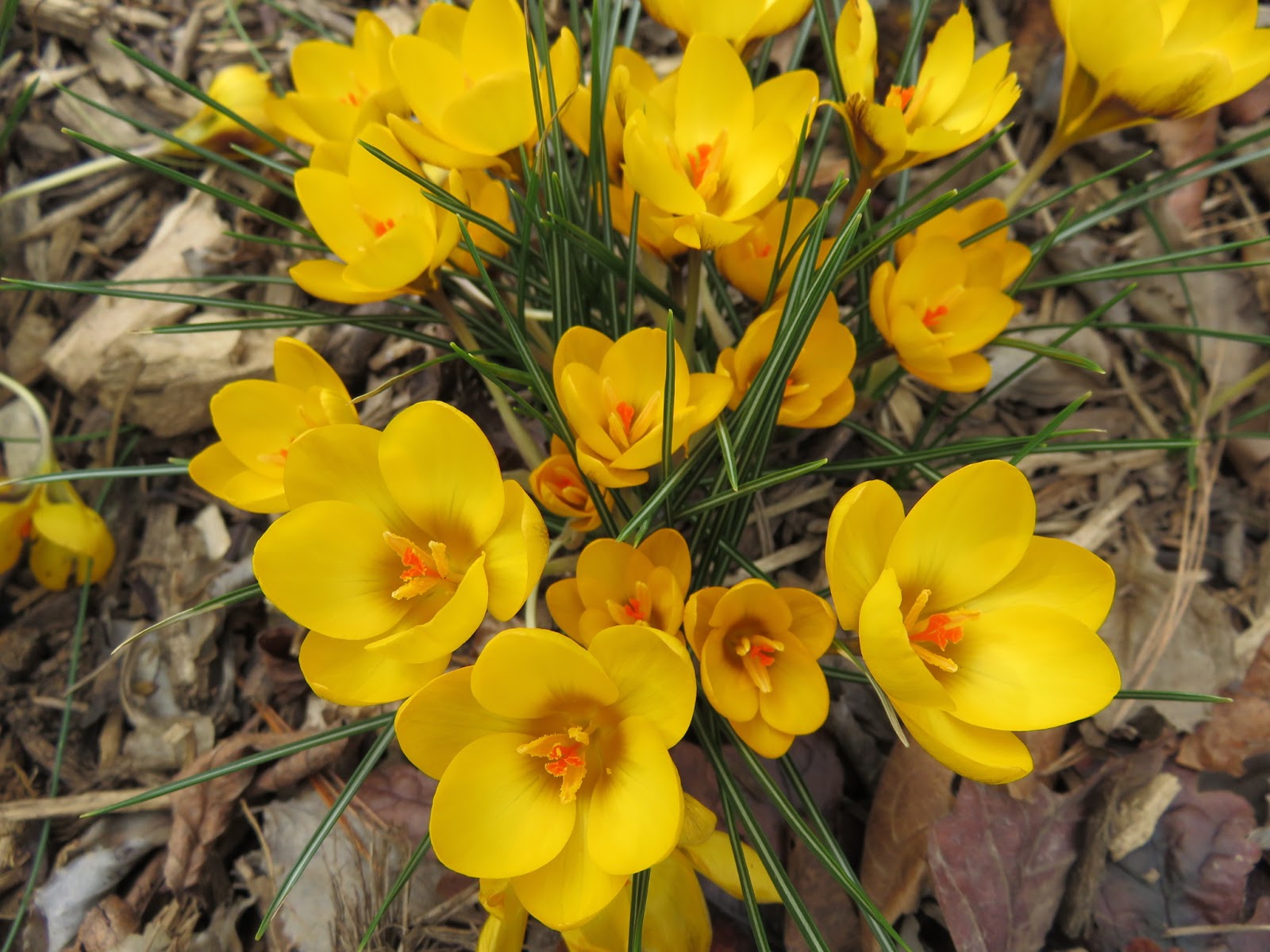
Crocus - An Early Start To Spring

Crocus (Crocus spp.) can be your wake-up call that winter is coming to an end (USDA hardiness zones 3- 8). They bloom in late winter (in the south); fall blooming varieties are also available. Bulbs (they're actually "corms") are available in flower colors from blue, purple, white, yellow, and mixed shades.

Choose from large and small flowered types. Six petal, cup shaped flowers stand tall above the foliage which emerges as bright green blades of grass with a center white stripe. The grassy foliage grows taller after flowers wither away.

Crocus thrive in full sun and tend to bloom earlier than those planted in partial shade. They prefer a well-drained soil with pH of 6.0 - 7.0. Crocus generally fail when sown in soggy ground.

Flower buds open to warming early morning sunlight, and close up in cloudy weather and in the evening. Crocus bloom and easily naturalize where winters are cold. Sow corms in mid-fall because they require 12-15 weeks planted in cold soil (35 - 45 °F) to initiate their blooms.

Crocus grow 3- 8 inches high depending on variety. Sow drifts of crocus in several places around the garden, under trees, sprinkled in the lawn, in alpine and rock gardens, and in containers. Interplant crocus with short growing narcissus, hyacinths and tulips, and pansies and violas. Plant them where perennials emerge in mid-spring and crocus foliage has died back.

Crocus thrive in the garden for many years. Eventually, some in the planting may decline due to virus diseases which distort the leaves and cause streaking; bloom buds may fail to open. Dig up and dispose of virus infected plants to prevent spreading diseases. Crocus are generally critter-proof, but areas overpopulated by deer, chipmunks, rabbits and squirrels may dig up corms or chew down leaves and flowers. Voles also feed on corms.

The ancient Greeks collected and dried the stigmas from autumn-flowering crocus (C. sativus) to make saffron herb used in food dishes.

Crocus may be purchased at most garden centers in the fall. For a wider choice in varieties, buy from a mail order supplier like Brent and Becky's Bulbs in Gloucester, VA. They also sell fall blooming crocus.

Saturday, February 10, 2018

Growing Pentas To Attract Pollinating Bees And Butterflies


Want to attract more butterflies to your garden this summer? Pentas (Egyptian starflower) (Pentas lanceolata) is what you should be planting. Pentas are one of the best pollinator-attracting plants around. Flower colors range from red, pale lavender, pink and white. 
Pentas blooms all summer long, even during the hottest weather conditions. The large clusters of star-shaped blooms attract butterflies, bees and an occasional hummingbird. These annual flowers perform well both in garden beds and in large containers. Keep plants deadheaded and remove any spent blooms to encourage constant flowering.

Pentas plants are annuals in most U.S. climates (zone 10 hardy). The overall habit of these plants is neat and compact. If plants get too long and woody, cut them back by one-half and feed them with a water soluble fertilizer such as Miracle-Gro™, Jacks™, or Schultz™. Tall leggy transplants should be tipped back to develop more branching.

Overall, pentas are very easy to maintain. Newer varieties have improved disease resistance and grow shorter, e.g. more compact in habit. Pentas are troubled by few diseases and should be inspected for insects like aphids (in cool springs) and spider mites (dry hot summer periods).

Pentas prefer to be planted in full sun and in moist, well-drained soil. Pentas will dry out in hot summers and should be irrigated weekly during these times.

Leading cultivar series are Graffiti™ and Kaleidoscope™ (compact growers); Butterfly, Starla, and Northern Lights (taller growing).

Sunday, January 21, 2018

Winter Blooming Witchhazels

'Primervera' witchhazel at Biltmore Estates, Asheville, NC
Starting in February, hybrid witchhazels from China, Korea and Japan begin flowering. Two of the very best are a Chinese species/cultivar called H. mollis ‘Wisley Supreme’ and a hybrid form called H. x intermedia ‘Westerstede’.

'Wisley Supreme' grows to 8 - 12 feet in height and almost the same in width. Its young branches are very upright. Its pale yellow strap-like flowers are long lasting and sweet smelling upclose. Spring-summer oval leaves posess a blue - green cast, and turn buttery yellow in the fall.

Favorite cultivar 'Westerstede' is a hybrid selection (Japanese (H. japonicum) and Chinese (H. mollis) from Germany. Westerstede bears light yellow 1- inch long ribbon-like flowers which are fragrant. Floral buds begin to open 1 - 2 weeks later than 'Wisley Supreme'. The broad 5 - 6 inch circular green leaves turn a nice buttery yellow in fall. Westerstede summer foliage possesses better leaf spot resistance than one-time favorite ‘Arnold Promise’.

Near the end of the calendar year, the U.S. native witchhazel (H. virginiana) blooms. By that time, most Americans pass by this very tall shrub/small tree with their attention set on Halloween and Thanksgiving.

Witchhazels are easy to grow in an average well-drained moist garden soil and in full sun to light shade.  A slightly acidic pH soil is preferred. Most hybrid witchhazels become tall 20 foot shrubs. Annual spring pruning is warranted to keep this vigorous shrub in check.

Most garden centers do not sell early blooming shrubs, particularly witchhazels, but plants are sold at e-nursery outlets.